
The Adhan in Islam is one of the most recognizable and beautiful symbols of the Muslim faith. Five times every day, the sound of the Adhan echoes from mosques around the world, reminding Muslims to pause their daily activities and turn toward Allah in prayer.
More than just an announcement, the Islamic call to prayer is a powerful declaration of faith, unity, and devotion. The words of the Adhan remind believers of Allah’s greatness, the Prophethood of Muhammad ﷺ, and the importance of Salah (prayer) in a Muslim’s life.
In this guide, we will explore the meaning of Adhan, its history, significance, and benefits, as well as why it remains an essential part of Islamic worship today.
What is the Adhan?
The word “Adhan” (أَذَان) literally means “announcement” or “proclamation.” In Islamic terminology, Adhan refers to the call made before each of the five daily prayers to inform Muslims that the time for Salah has arrived.
The Adhan serves as a public invitation to worship Allah and gather for prayer.
Every day, Muslims hear the Adhan before:
- Fajr (Dawn Prayer)
- Dhuhr (Noon Prayer)
- Asr (Afternoon Prayer)
- Maghrib (Sunset Prayer)
- Isha (Night Prayer)
The Adhan is considered one of the most visible symbols of Islam and has been practiced since the time of the Prophet Muhammad ﷺ.
Adhan Words and Their Meaning
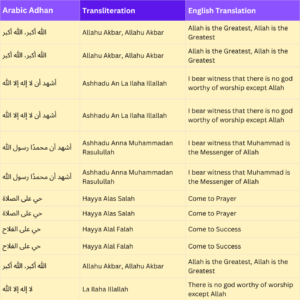
The adhan words are short but carry profound meaning. Here is the azan in English words, along with adhan translation for a deeper understanding:
Allahu Akbar, Allahu Akbar
Allah is the Greatest, Allah is the GreatestAshhadu an la ilaha illa Allah
I bear witness that there is no god but AllahAshhadu anna Muhammadur Rasool Allah
I bear witness that Muhammad is the Messenger of AllahHayya ‘ala-s-Salah
Hasten to the prayerHayya ‘ala-l-Falah
Hasten to successAllahu Akbar, Allahu Akbar
Allah is the Greatest, Allah is the GreatestLa ilaha illa Allah
There is no god but Allah
This beautiful composition is often referred to as the azan lyrics or adhan lyrics, expressing the core beliefs of Islam. In the early dawn prayer (Fajr), an additional line is added:
As-salatu khayrun min an-naum
Prayer is better than sleep
Adhan in Arabic
اللّٰهُ أَكْبَرُ، اللّٰهُ أَكْبَرُ
اللّٰهُ أَكْبَرُ، اللّٰهُ أَكْبَرُ
أَشْهَدُ أَنْ لَا إِلٰهَ إِلَّا اللّٰهُ
أَشْهَدُ أَنْ لَا إِلٰهَ إِلَّا اللّٰهُ
أَشْهَدُ أَنَّ مُحَمَّدًا رَسُولُ اللّٰه
أَشْهَدُ أَنَّ مُحَمَّدًا رَسُولُ اللّٰه
حَيَّ عَلَى الصَّلَاةِ
حَيَّ عَلَى الصَّلَاةِ
حَيَّ عَلَى الْفَلَاحِ
حَيَّ عَلَى الْفَلَاحِ
(Only in Fajr):
الصَّلَاةُ خَيْرٌ مِّنَ النَّوْمِ
الصَّلَاةُ خَيْرٌ مِّنَ النَّوْمِ
اللّٰهُ أَكْبَرُ، اللّٰهُ أَكْبَرُ
لَا إِلٰهَ إِلَّا اللّٰهُ
Special Addition in the Fajr Adhan (Morning Prayer)
The Fajr prayer, which is the first of the five daily prayers, includes an additional line in its adhan that sets it apart from the rest:
As-Salatu Khayrun Min An-Naum
Prayer is better than sleep
This line emphasises the virtue of waking up early for prayer, even when sleep may seem more appealing. It is only recited in the Fajr Adhan, making it a unique feature. Understanding the Fajr adhan translation helps Muslims appreciate the spiritual significance of rising early to remember Allah.
This special phrase appears after “Hayya ‘ala al-Falah” and before “Allahu Akbar” and “La ilaha illa Allah.” This addition further underscores the significance of prayer in Islam, particularly the early dawn prayer.
What Is Iqama? The Second Call to Prayer
After the adhan, there is a second call called the Iqama (إقامة). While the adhan announces the time for prayer, the Iqama for prayer signals the immediate beginning of salah.
Why Is the Adhan Important in Islam?
The importance of Adhan extends far beyond simply announcing prayer times.
1. It Reminds Muslims of Their Purpose
In today’s busy world, people can easily become distracted by work, business, and entertainment. The Adhan reminds Muslims to remember Allah throughout the day.
2. It Strengthens Islamic Identity
The sound of the Adhan is a symbol of the Muslim community and reflects the presence of Islam in society.
3. It Encourages Congregational Prayer
The Adhan invites Muslims to gather in the mosque, strengthening unity and brotherhood.
4. It Calls People Toward Success
The Adhan teaches that real success comes through faith, worship, and obedience to Allah rather than material achievements alone.
Why Is the Adhan Important in Islam?
The importance of Adhan extends far beyond simply announcing prayer times.
1. It Reminds Muslims of Their Purpose
In today’s busy world, people can easily become distracted by work, business, and entertainment. The Adhan reminds Muslims to remember Allah throughout the day.
2. It Strengthens Islamic Identity
The sound of the Adhan is a symbol of the Muslim community and reflects the presence of Islam in society.
3. It Encourages Congregational Prayer
The Adhan invites Muslims to gather in the mosque, strengthening unity and brotherhood.
4. It Calls People Toward Success
The Adhan teaches that real success comes through faith, worship, and obedience to Allah rather than material achievements alone.
Spiritual Benefits of Listening to the Adhan
There are numerous spiritual benefits associated with listening and responding to the Adhan.
Increased Reward
The Prophet Muhammad ﷺ taught Muslims to repeat the words of the Muadhin and make the prescribed supplication afterward.
Reminder of Allah
Hearing the Adhan softens the heart and renews a person’s connection with their Creator.
Protection from Neglect
Regular exposure to the Adhan helps Muslims maintain consistency in their daily prayers.
Witness on the Day of Judgment
Authentic Hadith mentions that everything that hears the voice of the Muadhin will testify in his favor on the Day of Resurrection.
What Is the Difference Between Adhan and Iqamah?
Many people confuse Adhan and Iqamah.
Adhan
The Adhan is the first call announcing that prayer time has entered.
Iqamah
The Iqamah is the second call given immediately before the congregational prayer begins.
While the Adhan invites Muslims to prepare for prayer, the Iqamah signals that the prayer is about to start.
What Should Muslims Say After Hearing the Adhan?

When listening to the Adhan, Muslims are encouraged to:
- Repeat the words of the Muadhin.
- Send blessings upon Prophet Muhammad ﷺ.
- Recite the well-known Dua after Adhan.
- Prepare for Salah without unnecessary delay.
This practice brings additional rewards and strengthens one’s relationship with Allah.
The Role of the Muadhin
A Muadhin is the person who calls the Adhan.
This role is highly respected in Islam because the Muadhin reminds people to worship Allah and helps maintain one of the most important acts of Islamic devotion.
Bilal ibn Rabah (RA), the first Muadhin of Islam, remains one of the most honored companions in Islamic history.
Adhan in Modern Times
Today, the Adhan continues to unite Muslims worldwide. Whether heard from a mosque in Makkah, London, New York, Kuala Lumpur, or Islamabad, the same words are recited, creating a powerful sense of unity among Muslims everywhere. In many communities, the Adhan remains an important public expression of faith and religious identity.
Conclusion
The Muslim call to prayer is not the only meaning of the Adhan; however, it is a rich symbol of religion, fraternity, and submission to God. It sounds in cities and towns, reaching hearts and reminding every Muslim of their responsibility to pray. Azan, adhan, or the Islamic prayer call is one of the most aesthetic and soul-touching actions in Islam, despite what you prefer to say about it.
By understanding the meaning, translation, and purpose of the adhan, both Muslims and non-Muslims can appreciate this unique tradition that embodies the essence of Islamic worship.